About Apollonia
Welcome to Apollonia, a vibrant tropical nation on the southern edge of the continent. With its capital city of Lyra, Apollonia blends natural beauty, cultural diversity, and a modern democratic system built over three decades of independence. Today, the country stands as a regional center for aviation, energy, education, and strategic cooperation.
Quick Facts
Capital:
Lyra
Government:
Parliamentary democracy
Independence:
12 March 1995
Currency:
USD
Population:
~18 million
Time Zone:
UTC+3
Calling Code:
+597
Internet TLD:
.ap
A Young Democracy With Deep Roots
For much of its history, Apollonia existed under colonial administration.
In 1995, a peaceful transition established the Republic of Apollonia, setting the foundation for a parliamentary democracy grounded in free elections, independent institutions, and civil liberties.
Since independence, the country has prioritized education, healthcare, infrastructure, and sustainable development—shaping a stable and forward-looking society.
Geography & Setting
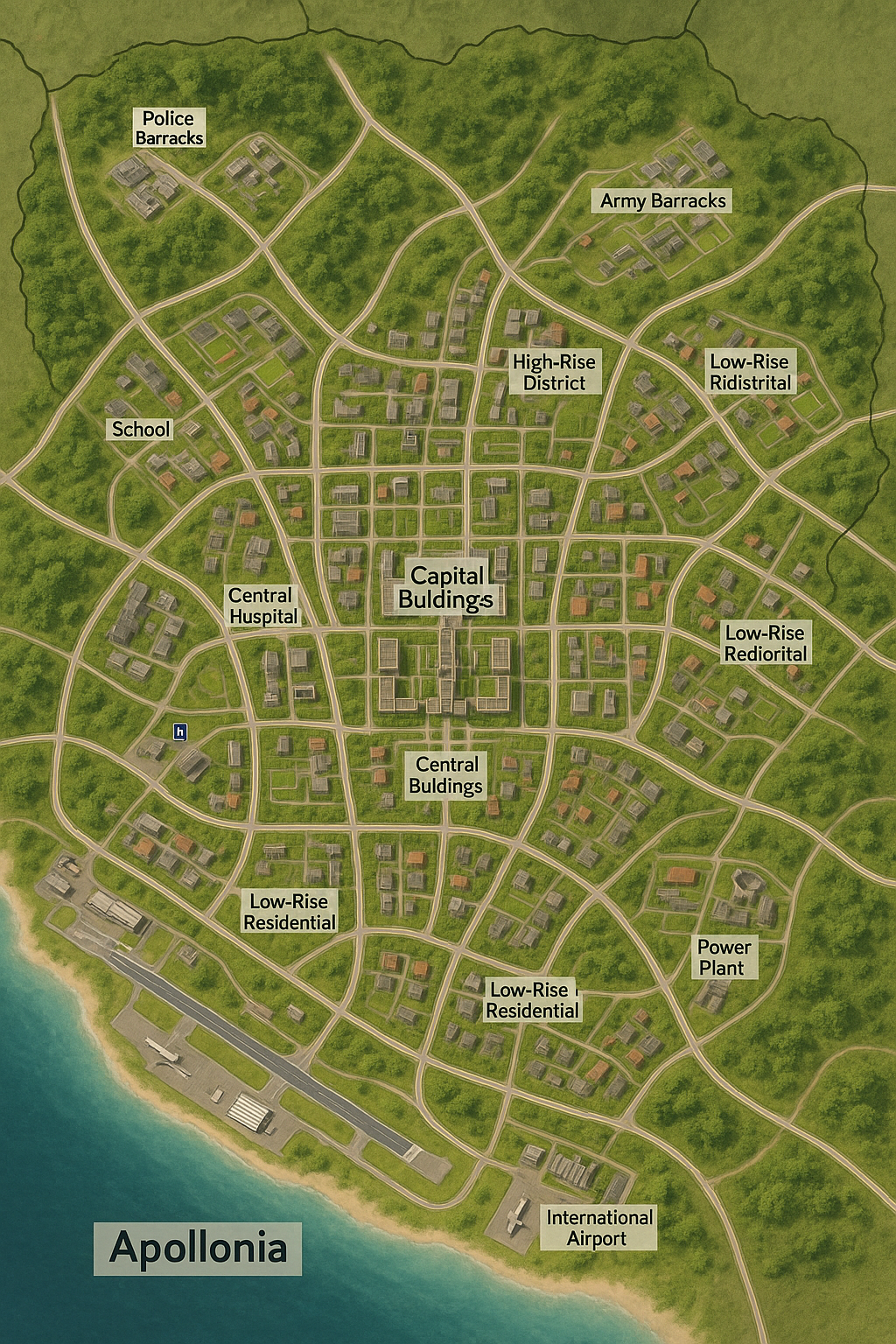
Apollonia occupies a tropical coastal region, with the sea forming its entire southern border. The north, east, and west connect to neighboring countries via mountain passes, forest corridors, and river basins.
The landscape offers:
-
White-sand beaches
-
Lush rainforests
-
River valleys and fertile plains
-
Rapidly growing urban centers
Its largest and most influential city, Lyra, serves as the nation’s political, cultural, and economic heart.
People & Culture
Apollonia is home to approximately 18 million residents from a rich tapestry of cultural backgrounds.
Ethnic Groups
Apollinean (48%) – Indigenous coastal and lowland communities
Marovian (32%) – Mixed European–Caribbean heritage
Orindan (15%) – Highland and interior populations
Other / Mixed (5%)
Language
-
English is the official language
-
Marovian Creole and Orindan dialects are spoken regionally
Apollonian society values unity, education, and shared identity, reflected in the national motto, “Strength Through Unity.”

Economy
Apollonia maintains a mixed, growth-oriented economy, using the United States Dollar (USD) as its national currency.
Key economic sectors include:
-
Tourism and eco-tourism
-
Renewable energy
-
Technology manufacturing
-
Agriculture and tropical exports
-
Logistics, aviation, and maritime trade
Strategic investment in energy resilience, education, and mobility has positioned Apollonia as a rising regional hub.

National Infrastructure
Apollonia’s infrastructure supports rapid development and national preparedness.
Core Assets
-
Lyra International Airport – primary gateway for travel and trade
-
Southern Coastal Power Plant – dual-tower facility supplying much of the national grid
-
Central Hospital in Lyra – flagship medical center
-
National Highway Network – linking Lyra with major cities and all border regions
-
Army and Police Barracks – ensuring homeland security
-
Modern Schools and Universities – distributed across all neighborhoods
-
Two Major Shopping Malls – commercial and social anchors in the urban districts
Urban Structure
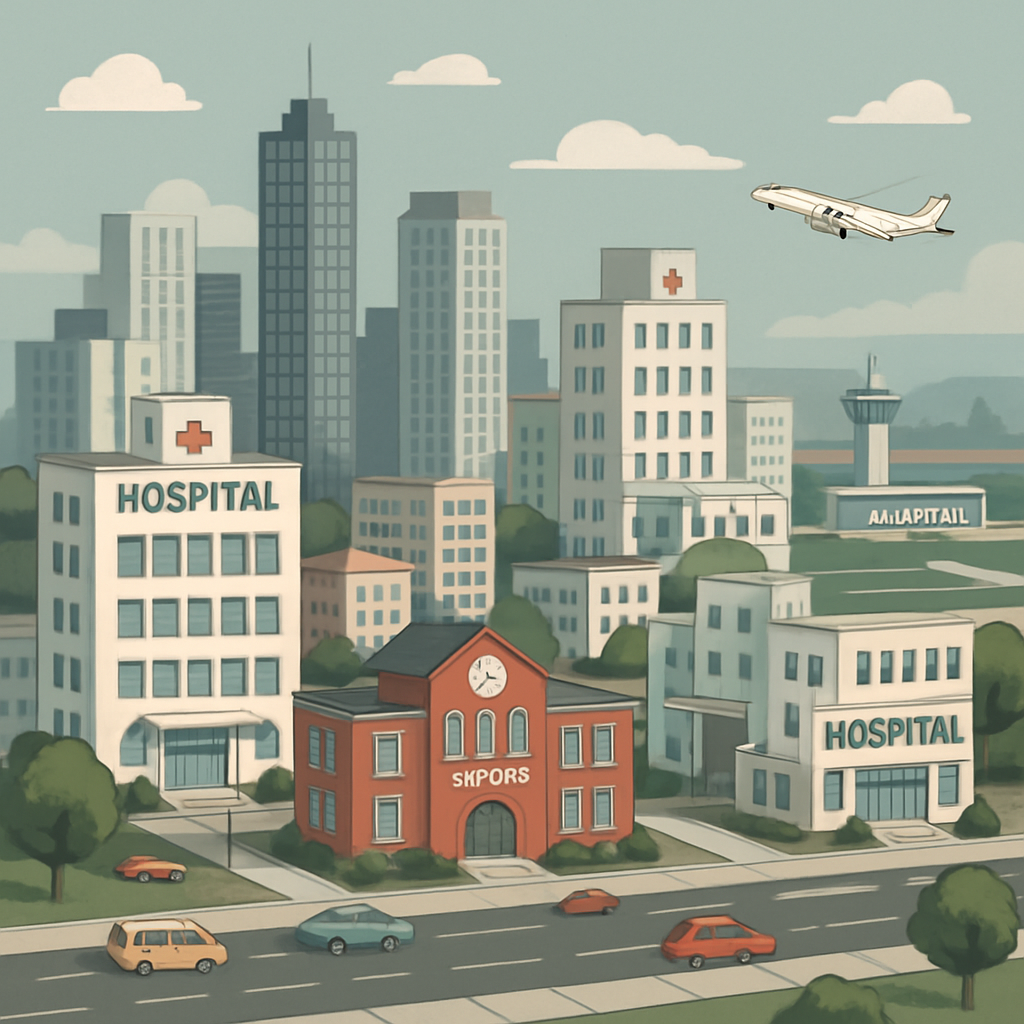
- Two high-rise districts with modern towers
- Two low-rise residential areas with schools, markets, and community centers
Data-Driven Marketing
National Symbols
Elevate your digital marketing with smart a
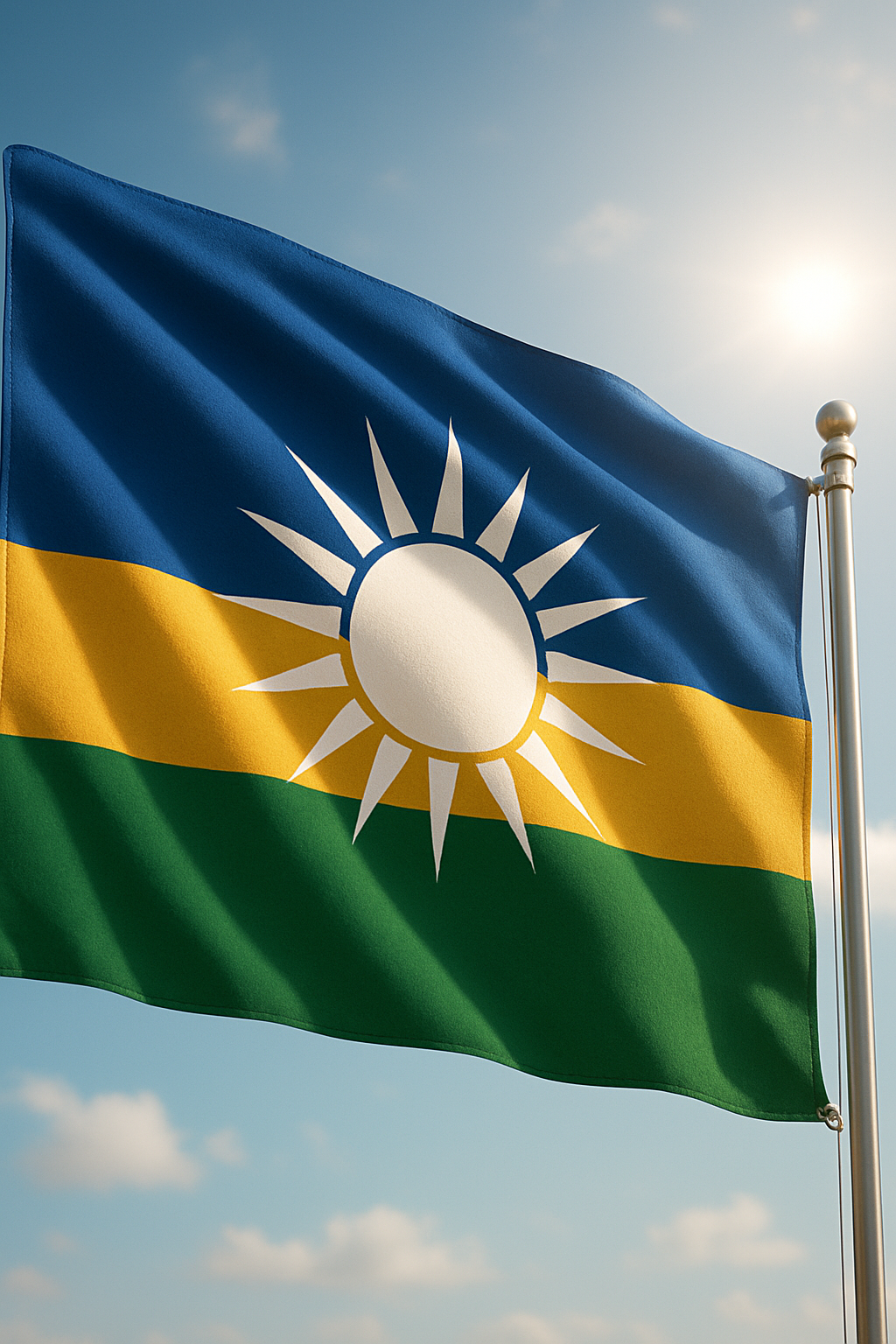
A horizontal tricolor of deep blue, gold, and green, representing:
-
Sea
-
Prosperity
-
Land and nature
A white rising sun symbolizes unity, hope, and renewal.
The National emblem is A shield framed by palm branches and a golden eagle, bearing the national motto:
“Strength Through Unity.”
The Anthem is called “Winds of the Dawn”